Plant a tree in my name... to immortalize the name of a martyred child and support a surviving child.
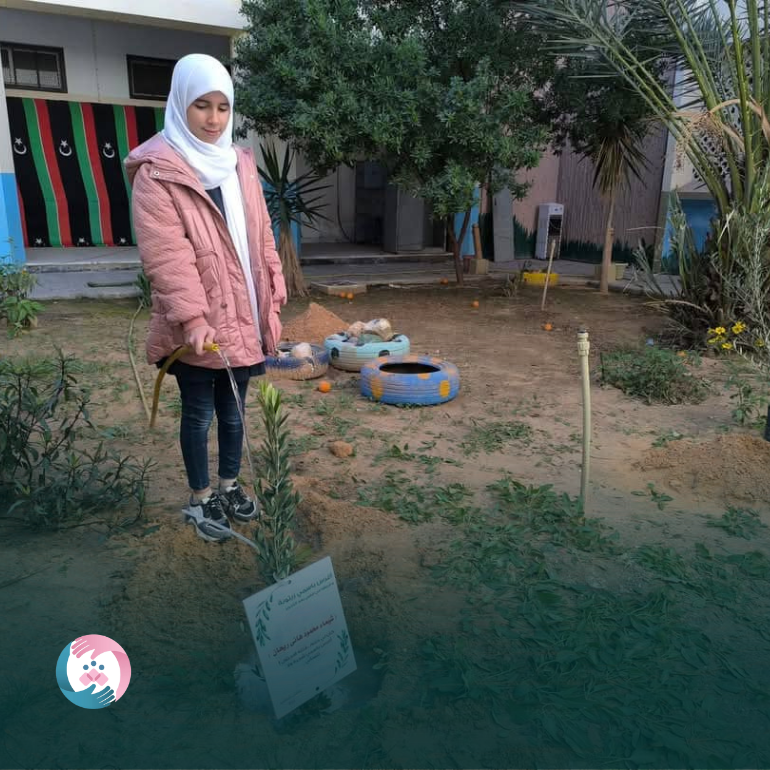
With every aggression and bombing, a child is martyred, and with every rubble lifted, the story of an unfulfilled dream is uncovered. The initiative, "Plant a Tree in My Name" (اغرس باسمي شجرة), emerged from the heart of loss, launched by the Family Covenant (ميثاق العائلة) as a humanitarian call addressing the depths of the human conscience. The initiative didn't come merely as a symbolic act, but as another form of resistance; writing the names of martyrs on the trunks of trees, not on gravestones.
When the Tree Becomes a Witness to Both Name and Dream
The core idea of the initiative is to plant a tree in the name of every martyred child in Gaza. Each tree is accompanied by the unfulfilled dream of that child, acting as an alternative life granted to them by the Earth. These trees are planted in various locations around the world, turning into living memorials to the stories of violated childhoods, and testimonies that remind the world that these children were not just numbers in news bulletins, but pulsating dreams killed before they were born.
From Martyrs to Survivors: Whom Do We Immortalize, and Whom Do We Support?
"Plant a Tree in My Name" does not stop at symbolic commemoration. Its deeper humanitarian dimension is evident in its pursuit of building a new life from the heart of memory. The initiative relies on planting trees in several countries, with the financial revenue—after deducting care costs—invested in supporting female breadwinners and their children in Gaza who have been stripped of the hallmarks of childhood and the support of life. Thus, purchasing a tree transforms into a means of relief and aid.
How the Initiative Spread Globally?
The Family Covenant ensured the initiative was implemented with a collective, participatory spirit. Local teams were formed in several countries, introductory materials were prepared and translated into different languages. Community planting campaigns began with the participation of institutions, schools, activists, and citizens who believed that "The name does not die when it is planted."
Thus, the roots of the martyrs extended from Palestine to Jordan, Bahrain, Algeria, Libya, Indonesia, Europe, Turkey, Mauritania, West Africa, and Djibouti. In every spot, there is a tree; in every tree, a name; and in every name, an incomplete story.
Stories from the Field
Planting operations were carried out in public spaces, schools, and symbolic squares. 300 olive trees were planted in Jordan in cooperation with the Arab Society for the Protection of Nature, 200 trees were added in Bahrain, and dozens were planted in university and school squares in Libya. In Mauritania, the initiative witnessed broad parliamentary and public presence, where trees were planted in front of the American Embassy, sending a direct message to those who refuse to listen.
In its future vision, the Family Covenant seeks to transform the Martyred Children of Gaza Garden into an interactive ecological museum, where trees integrate with screens and media, narrating the children's stories in a language accessible to new generations. It is also working to implement the initiative in more countries, build partnerships with environmental and women's associations to ensure the idea's sustainability, and launch open donation campaigns allowing people around the world to plant a tree in the name of a martyred Palestinian child